
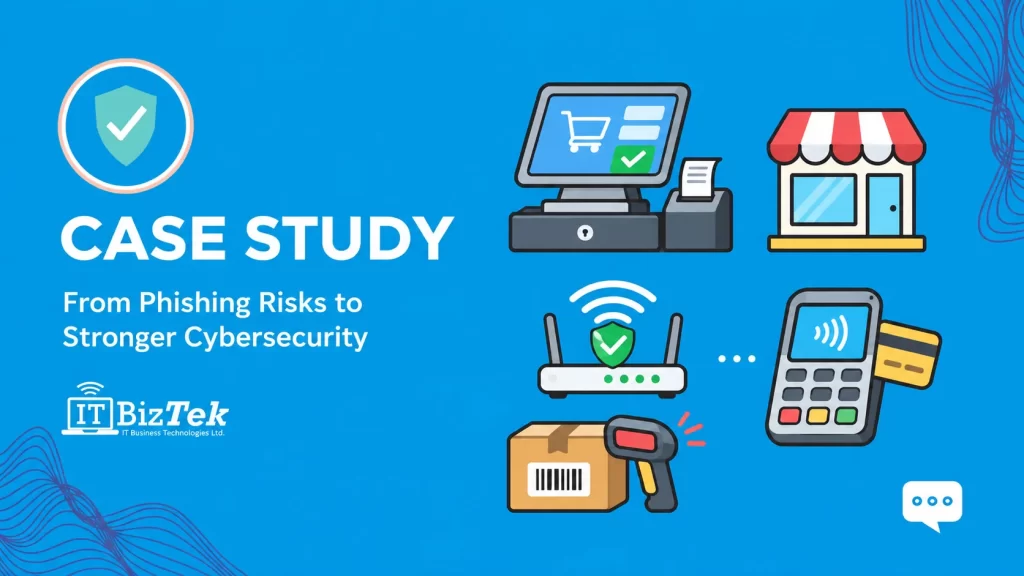
Illustrative case study: This example demonstrates how retail IT infrastructure improvements can address common operational challenges.
For retail businesses, reliable technology is essential to keeping daily operations running smoothly. Point-of-sale (POS) systems, inventory management software, payment terminals, employee workstations, and wireless networks all need to work together.
When these systems experience connection problems, even small interruptions can affect checkout operations, employee productivity, and customer satisfaction.
Consider a growing retail business in Toronto operating multiple locations across the Greater Toronto Area. As the company expanded, its existing IT infrastructure struggled to support the increasing number of connected devices, transactions, and employees.
The business needed a more reliable network, stronger security, and centralized IT support without adding unnecessary complexity to its daily operations.
The Challenge: Unreliable Connectivity and Growing IT Demands
The retailer depended on several interconnected systems to manage daily operations, including:
- Point-of-sale terminals and payment processing devices
- Inventory management and stock tracking software
- Employee computers and mobile devices
- Wireless networks for staff and customers
- Cloud-based business applications
- Networking equipment connecting different areas of each location
Over time, the company began experiencing recurring connectivity problems.
Employees occasionally struggled to access inventory information, wireless connections became unreliable in certain areas, and technical issues required individual troubleshooting at different locations.
Several problems needed to be addressed:
- Inconsistent Wi-Fi coverage throughout retail locations
- Limited separation between guest and internal business networks
- Aging networking equipment
- Difficulty monitoring devices across multiple stores
- Limited visibility into recurring network problems
- Inconsistent IT configurations between locations
- Increasing dependence on cloud applications and connected devices
The biggest challenge was maintaining reliable IT operations as the business continued to expand.
The retailer needed an approach that would improve connectivity, protect business systems, and make ongoing IT management easier.
Our Process
1. IT Infrastructure Assessment
The first step in this example engagement was a comprehensive review of the retailer’s existing IT environment.
An IT infrastructure assessment would examine how devices, applications, and networks communicate across the business.
Important areas would include:
- Network equipment and infrastructure
- Existing cabling and network connections
- Wireless access point placement
- POS system connectivity
- Firewall and network security settings
- Device performance and reliability
- Internet connectivity requirements
- Existing monitoring and support processes
The objective would be to identify the underlying causes of connectivity problems rather than repeatedly addressing individual symptoms.
A complete assessment would also help determine which infrastructure components could be retained and which required improvements.
2. Network Infrastructure Improvements
Retail locations often depend on a combination of wired and wireless connections.
POS terminals, employee computers, inventory systems, and other business-critical devices require dependable access to the network.
Using its network cabling services, ITBizTek could help improve network infrastructure by:
- Evaluating existing cabling and connection points
- Replacing or repairing problematic network connections
- Organizing networking equipment and cable management
- Improving connections between critical business devices
- Testing network performance and identifying bottlenecks
- Preparing infrastructure for additional devices and future expansion
The goal would be to provide a stable networking foundation capable of supporting everyday business operations.
A properly organized network also makes maintenance and troubleshooting easier as the company grows.
3. Secure Wi-Fi and Network Separation
Wireless connectivity plays an important role in modern retail operations.
Employees may use wireless devices to check inventory, manage orders, or communicate with other locations. Customers may also expect access to guest Wi-Fi.
However, allowing every device to use the same network can introduce unnecessary security risks.
ITBizTek’s secure Wi-Fi solutions provide options for separating wireless access based on business requirements.
For this type of retail environment, improvements could include:
- Dedicated wireless access for employees
- Isolated guest Wi-Fi for customers
- Separate network access for business-critical devices
- Improved wireless coverage throughout the store
- Stronger access controls and network configurations
- Business-grade wireless access points
This approach helps reduce unnecessary access between different types of devices while improving the wireless experience for employees and visitors.
4. Centralized Network Monitoring
A recurring challenge for businesses operating multiple locations is identifying technical problems before they interfere with daily activities.
Without centralized monitoring, network issues may only become apparent when employees report that a device or application has stopped working.
Through its IT monitoring services, ITBizTek could provide greater visibility into the retailer’s technology environment.
Monitoring could cover:
- Network equipment availability
- Server and device health
- Hardware performance
- System alerts and recurring issues
- Backup status
- Critical infrastructure availability
With centralized monitoring, the support team would have a clearer view of the environment and could investigate alerts without relying exclusively on reports from store employees.
This would support a more proactive approach to IT management.
5. Managed IT Support Across Locations
Improving infrastructure is only part of the solution.
Retail businesses also need reliable technical assistance when employees experience problems with devices, applications, or connectivity.
A centralized support arrangement through Managed IT Services could provide a consistent process for handling technical issues across all retail locations.
This could include:
- Remote troubleshooting and technical support
- On-site assistance when required
- Device and system maintenance
- Software updates and patch management
- Network troubleshooting
- Ongoing infrastructure reviews
- Coordination of IT needs across multiple locations
Instead of each store managing its own technical problems independently, employees would have access to a consistent IT support process.
The company could also plan technology upgrades and expansion projects more effectively.
The Results: A More Reliable Retail IT Environment
With the proposed infrastructure improvements and managed support arrangement in place, the expected operational benefits would include:
More Reliable POS Connectivity
Improved wired and wireless infrastructure would help reduce connectivity-related interruptions affecting point-of-sale devices.
Better Wireless Coverage
Employees would have more dependable access to the applications and systems they use throughout the store.
Stronger Network Separation
Guest devices and internal business systems would operate on appropriately separated networks, reducing unnecessary exposure.
Improved Visibility Into Technical Issues
Centralized monitoring would make it easier to identify network problems and investigate recurring disruptions.
Consistent IT Support
Employees across different locations would have a clearer process for requesting technical assistance.
Infrastructure Prepared for Expansion
A standardized networking approach would make it easier to plan future store openings, equipment upgrades, and additional business systems.
For retail leadership, the main benefit would be having an IT environment that is easier to manage and better aligned with the company’s operational needs.
Rather than treating connectivity problems as isolated events, the business could approach network reliability, security, and support as part of one coordinated IT strategy.
Why Reliable IT Infrastructure Matters for Retail Businesses
Modern retail operations depend on much more than a working internet connection.
Every location may have payment terminals, inventory systems, security equipment, employee devices, cloud applications, and wireless networks that need to communicate reliably.
When these systems are not properly maintained, small technical problems can create larger operational challenges.
For example, poor wireless coverage can interrupt inventory updates. Unreliable network connections can affect checkout systems. Inconsistent equipment configurations can make technical problems more difficult to resolve across multiple stores.
A coordinated IT strategy helps businesses reduce these risks while supporting growth.
Important considerations include:
- Regular network assessments
- Reliable wired connections for critical equipment
- Secure wireless network configurations
- Appropriate separation between business and guest devices
- Ongoing system monitoring
- Consistent support and maintenance
- Infrastructure planning for future expansion
The objective is not simply to introduce more technology.
It is to ensure that existing and future systems support the way the business operates.
Retail IT Services for Toronto and GTA Businesses
Retail businesses face unique technology challenges because their systems must support employees, customers, transactions, inventory, and daily operations simultaneously.
Whether a company operates one store or several locations, reliable IT infrastructure is important for maintaining productivity and delivering a consistent customer experience.
ITBizTek provides retail IT support services throughout Toronto and the Greater Toronto Area, including managed IT services, network infrastructure, cybersecurity, secure Wi-Fi, and ongoing monitoring.
Our team helps businesses evaluate their current technology environment, identify opportunities for improvement, and develop solutions that support their operational requirements.
Experiencing recurring network problems, unreliable Wi-Fi, or POS connectivity issues?
Contact ITBizTek to discuss your retail IT environment and learn how our team can help improve network reliability, security, and ongoing technical support.